From a slow leak behind the drywall to a full basement flood, North Charleston property owners call Aqua Guard Water Damage because we show up with the right gear the first time — no guesswork, no upsells at the door.
Call +1-844-578-1604 Now
Aqua Guard Water Damage built its North Charleston operation around one standard: arrive fast, document everything with moisture readings and thermal imaging, and communicate the drying plan in plain language before we touch a single wall.
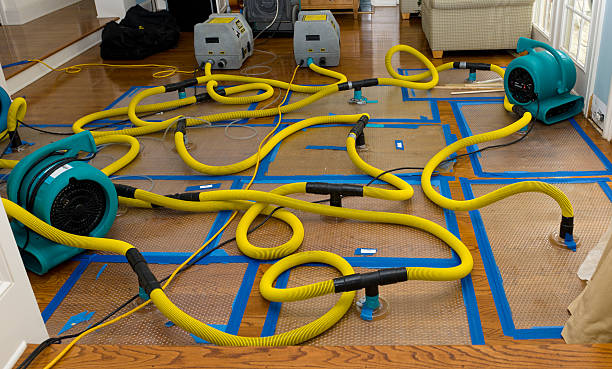
Every technician on our North Charleston roster is background-checked, licensed, and insured, and every truck is stocked with commercial-grade air movers, low-grain-refrigerant dehumidifiers, and antimicrobial treatment for contaminated water intrusion.
Beyond the technical certifications, our crews are trained to communicate clearly under pressure, because a homeowner dealing with a flooded home deserves plain answers, not jargon.

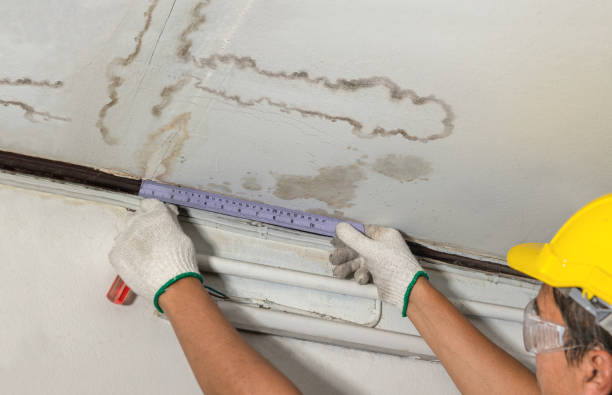
Ceiling stains near a bathroom or kitchen almost always trace back to a plumbing failure rather than a roof leak, which means the source is often closer and easier to fix than homeowners assume.
Musty odors that seem to follow you from room to room often mean the HVAC system is circulating spores from a hidden wet area, which spreads the problem rather than solving it.
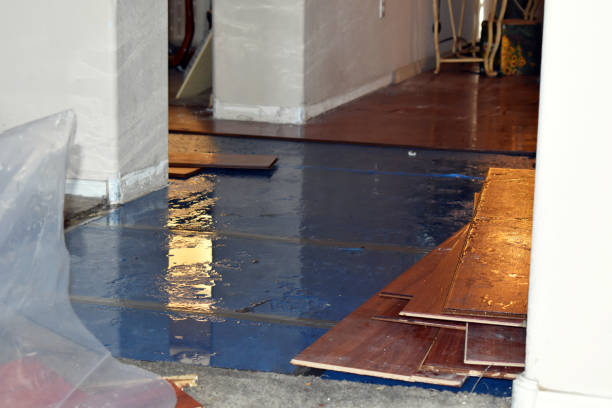
Carpet that stays damp or squishy days after you last noticed water is holding moisture against the subfloor, which is exactly the condition that lets mold take hold underneath.
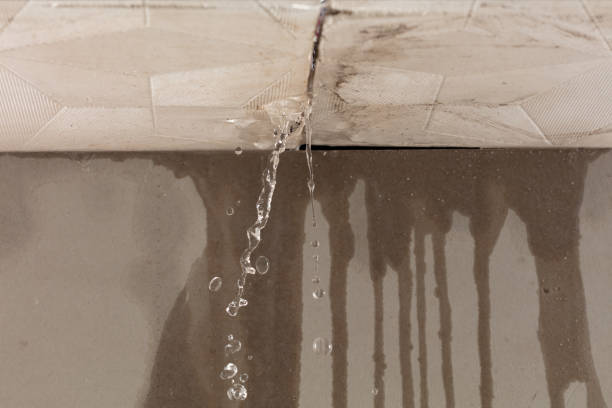
A running-water sound when every fixture in the house is off is a strong sign of a hidden leak feeding your rising bill.
Wallpaper that lifts at the seams after being fine for years is often a sign that humidity or a slow leak has changed the moisture level inside that wall.
Dark spotting in grout lines or around window frames is often the first visible sign of a moisture problem that's been developing for weeks.
We treat Flood Damage Cleanup as one continuous job rather than a series of handoffs — the crew that extracts the water is accountable for the drying results, and the drying results determine what reconstruction is actually needed.
We prioritize extraction speed above everything else in the first hour, because every additional hour standing water sits raises the odds of secondary damage to subfloors and framing.
Drying logs track humidity, surface moisture, and airflow at every checkpoint, so you get documented proof the structure is dry before we close out the job — useful for your insurance claim too.
Our sewage cleanup protocol follows IICRC S500 contamination standards, isolating the affected area, removing unsalvageable materials, and disinfecting every surface that had contact with blackwater.
Once structural drying is underway, we apply antimicrobial treatments to studs, subfloor, and other porous surfaces to stop mold colonies before they establish, especially in areas that stayed wet more than 48 hours.
The same team that documented the damage and dried the structure hands off directly to reconstruction, which keeps the whole timeline shorter and the paperwork simpler.
Furniture, documents, and electronics affected by water intrusion get assessed on-site, with salvageable items cleaned and stored while unsalvageable items are documented for your claim.


Dispatch asks enough to prep the right equipment before the truck even leaves, so the crew isn't guessing what they'll find on arrival.
We document the loss with photos and moisture readings before touching anything, which also protects your insurance claim.
Standing water comes out first with truck-mount equipment, then air movers and dehumidifiers go to work based on the psychrometric numbers we recorded.
We re-test every affected area before calling a job complete, then coordinate repairs so you're not left with an open punch list.
We operate under proper licensing and insurance in every market we serve, with documentation available on request.
A crew close by isn't a marketing line — it's the difference between drying equipment running in an hour versus waiting half a day.
We'd rather explain the cost clearly upfront than have that conversation after the job is already underway.
If a drying target isn't met on the first pass, we extend equipment placement at no extra charge until moisture readings confirm the structure is dry.
We'd rather run drying equipment an extra day at our own cost than close out a job with a moisture reading we're not confident in.
Our technicians don't get paid faster by closing jobs early, which keeps the incentive aligned with actually finishing the drying properly.
Call +1-844-578-1604Aqua Guard Water Damage dispatches crews throughout North Charleston and the surrounding zip codes, including 29420 29456 29485 29404 29405 29406 29418 29416 29419 29423, so response times stay fast no matter which side of town the call comes from.
We track call volume by zip code across North Charleston to keep crew staffing matched to where emergencies actually happen most often.

"The team here in North Charleston treated our emergency like it actually mattered, not like another ticket in a queue, and the drying documentation they left us was thorough enough to hand straight to our insurer."
James R., North Charleston"Our basement took on water during a storm and the crew classified it, extracted it, and had dehumidifiers running the same afternoon. The final invoice matched the upfront quote exactly."
Denise M., North Charleston"Professional from the first phone call to the final walkthrough. They re-tested moisture levels before closing the job instead of just eyeballing it."
Marcus T., North Charleston"The reconstruction crew matched our original flooring almost perfectly after the water damage repair — you'd never know there was a leak."
Priya S., North Charleston"Drying logs were shared with us daily so we always knew exactly where the job stood, not just a vague 'it's drying' update."
Carlos V., North Charleston"Our commercial unit flooded overnight and they had industrial equipment running before our staff arrived for the morning shift."
Angela F., North Charleston"The tech explained exactly which boards needed to come out and which ones tested dry enough to keep, so we didn't pay to replace more than necessary."
Tyrone B., North Charleston"They explained the sump discharge issue causing our crawl space flooding in plain terms and fixed it as part of the same visit instead of scheduling a separate appointment."
Wendy K., North Charleston